

Mirror, mirror
… on our stall… to your mantle, just buy them all!
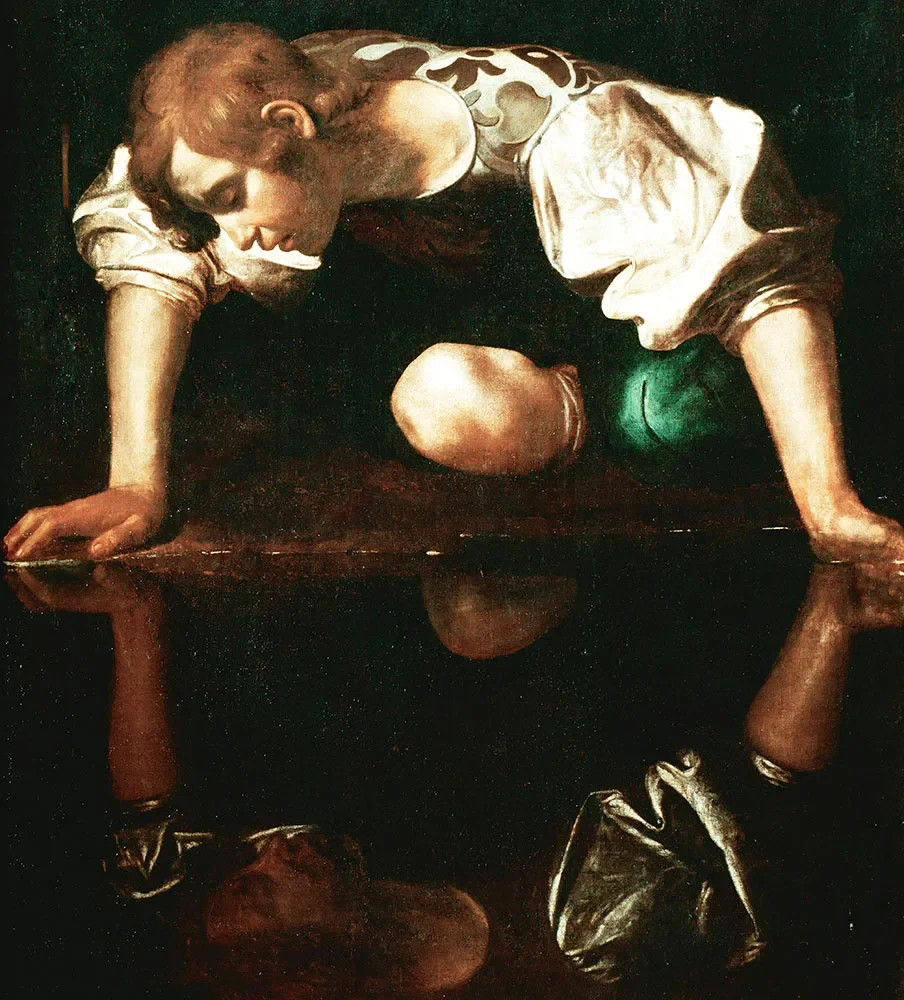
Narcissus by Caravaggio, an early example of a man obsessed with his looks, in today’s world he’d be looking at his muscles in the gym
History of the reflected image
So your mother always told you what a gorgeous creature you are.
You’re living in the prehistoric period, not that you realise that, and every evening by the light of a fire you created Bear Grylls-style, she tells you just how special and perfect you are as she combs her three remaining fingers through your matted hair.
‘My gorgeous one! You really are the most beautiful caveperson in the valley.’
Nice, you think, no reason not to believe that.
‘You really take after your mother’.
Hmmm, a moment of disquiet. I’m gorgeous AND take after mother? Though the thought seems faintly unlikely, you’re at least 50% Neanderthal and don’t need to waste your precious brain power on such complex cognitive gymnastics.
Off you go next morning, as mother arranges her warty skin flaps into a gruesome smile waving you off on another hunting and/ or gathering adventure.
You’ve walked far beyond your normal route. The air is filled with the delicious sound of birdsong and the gentle scaping of your knuckles on the forest floor. Beyond the trees the stream has formed a calm pool. Interesting, you think. Never seen one of those before. Maybe I could do a bit of a gather there. Pick a few of those berries by the water edge. Gather them up and that. You lift your brow overhang up for a better view and amble over, the breeze tickling the thick hedge of hair along your back.
As you lean over the pool to pluck the berries on the other side, you freeze. A long, strangulated fart of terror escapes behind you as you’re faced with it. The monster. Gnarled horrifying features. Deep-set pin eyes. Misshapen teeth, a thatch of hair protroding from its nose, limbs contorted and deformed, and a sinister hump on its back.
Blimey, you think.
It sort of looks like mother…
The earliest manufactured mirrors
The earliest deliberately manufactured mirrors were crafted from obsidian, highly polished and finished with animal fat to retain a reflective image. Pointy, a bit stinky and we don’t stock them. Lets move on.
I could bore you with a fairly long and convoluted list of other early mirrors, think Mesopotamia, Ancient Egypt, and a lot of different metals. I’ll bet there are a fair few PhD students currently pulling together a dense thesis on the subject. Titles like ‘ Qijia Culture: Pioneers of Snazzy Bronze Mirrors’. But lets get to the good stuff, the buyable stuff. Oh sweet. sweet commerce, I shall not neglect your siren call.
The looking glass
Glass mirrors, that’s what we sell. We’re not a museum, we just curate.
So in the beginning it was the bloody French who were creating the glass. Always sticking their beaks in aren’t they? They were okay at it, I suppose, if you like that kind of thing, and don’t mind the odd garlic smudge. But it was the Venetians who perfected the process. Then those clever Venetians started adding a tin-mercury backing which made a gorgeous reflective surface. Well, depending on who was looking into it…
The people went wild for mirrors! But they remained very, very pricy. Countess de Fiesque was reported to have traded an entire wheat farm for a mirror. She thought she had nabbed a great bargain. Similar bargains can be found in our shop here, a curated emporium where the discerning buyer can find a range of high quality products, mirrors included and at prices less than the equivalent value of a wheat farm… tempting isn’t it?
On the next blog we will be going through the decorative history and styles of glass mirrors. But until then, why not feast your eyes on this 19th century giltwood French beauty from our latest drop…which was made exclusively available for subscribers to our newsletter this month. If you love that Louis Philippe style and oodles of battered charm you will love it!
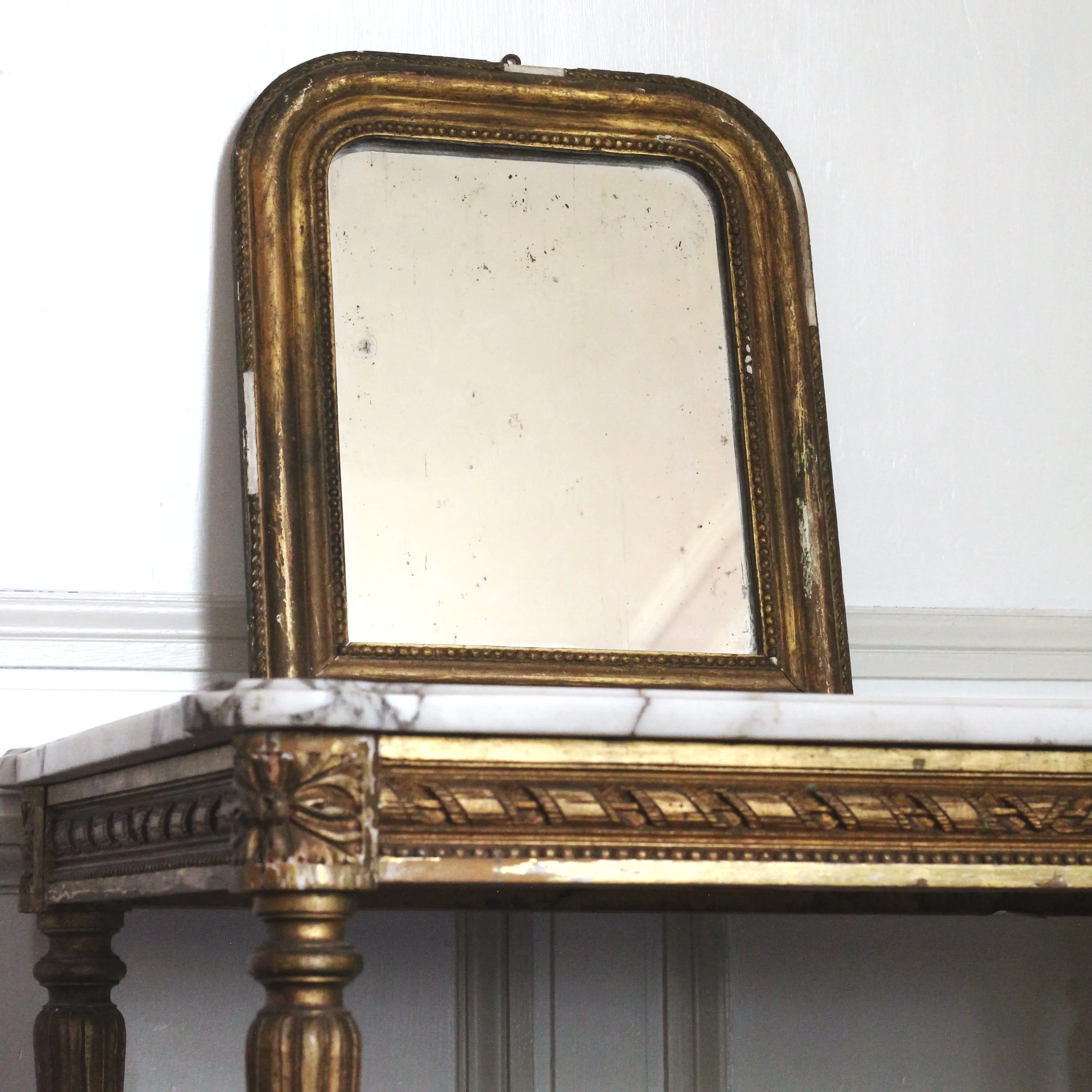
Available in our shop after Friday 7th August…